
Fairy Tales # 23: The Lamp in the Chest
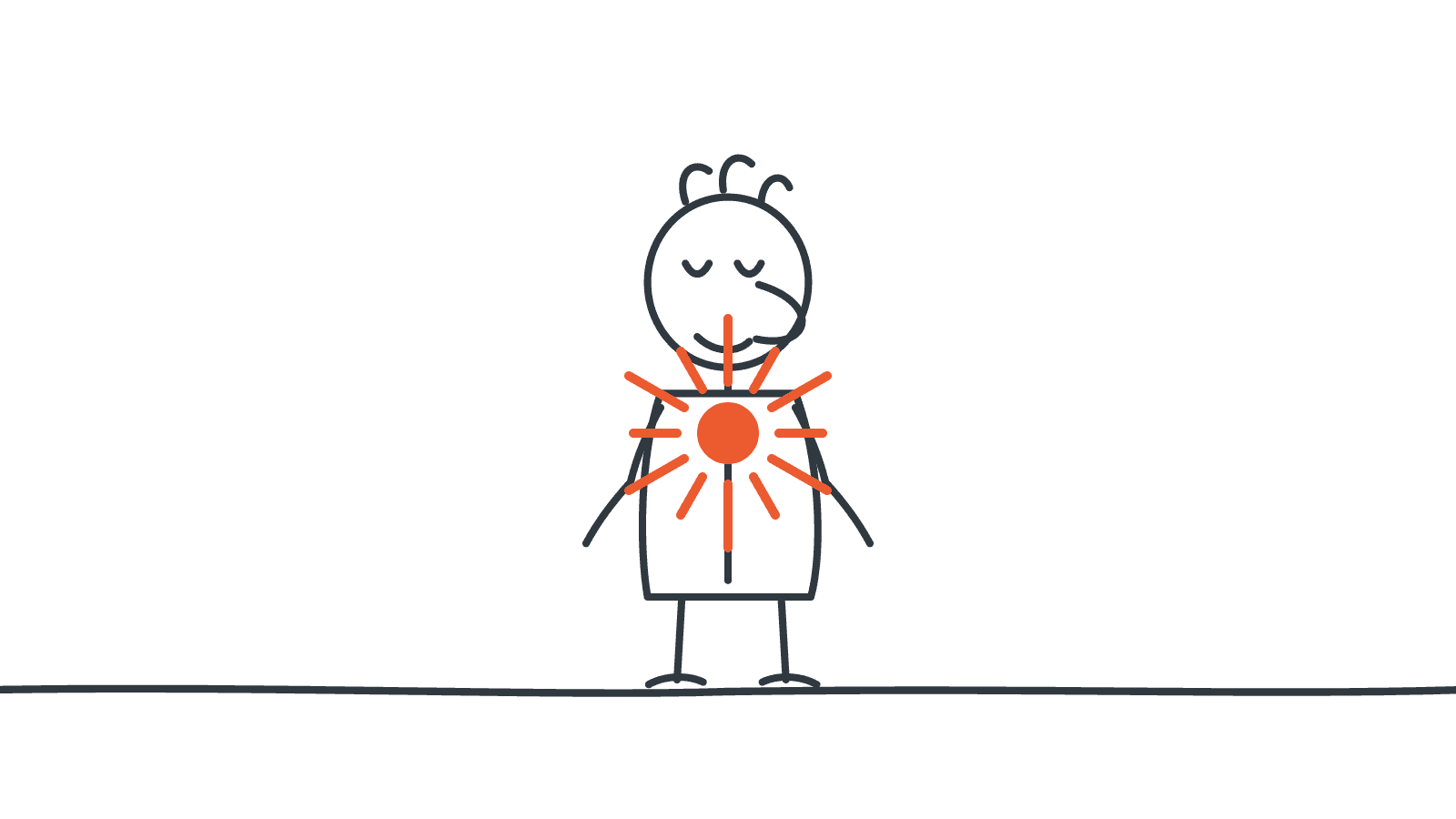
Peter had a small lamp in his chest. It had lit up long ago, when he once helped a neighbor carry a wardrobe, and then again when he gave someone his last sandwich. The lamp burned quietly and shone on nobody, because Peter kept it for himself. He thought: it might come in handy.
The lamp never got the chance. It gathered dust and grumbled quietly.
One morning Peter felt that someone was sitting on top of his head. It was an old man the size of a teaspoon. He swung his legs and looked out of the window, as if that was exactly where he belonged.
– Who are you? – asked Peter.
– I am your teacher, – said the old man. – You have never seen me, but I have been here a long time. You were just always looking ahead.
– And what are you doing on my head?
– Waiting for you to want something for real.
Peter thought about it. He wanted a pie, new shoes, and for Tom to stop snoring on the other side of the wall. But that was not for real, just small stuff. So he looked into the lamp and saw that it shone in one direction, outward, and said:
– I want everyone to be well. Everyone. Tom, and the cat, and the mosquito that bites me. I want them to stop suffering, and I want to be big enough to help them.
The old man jumped up and clapped his hands.
– What joy! – he cried. – What luck! Do you even understand what you have just said? I am taking you under my care!
In his delight the old man began to melt like sugar in tea. He dissolved into the top of Peter’s head and flowed down into his heart, where he tickled the lamp.
Peter wanted to laugh, but found that he had nothing to laugh with: he was dissolving too. First the shoes disappeared, then the knees, then the nose, then whatever had been thinking about the nose. What remained was emptiness, and it turned out to be surprisingly spacious, enough to hang a hundred wardrobes.
And then someone stepped out of the emptiness. It was the Buddha, golden and calm, and his nose was exactly the same, Peter’s. Peter wanted to ask how this had happened, but realized there was nobody to ask: the one who asked and the one who was asked stood in the very same place.
– Oh well, – said the Buddha, and rejoiced.
The lamp in the chest flared up. The light did not stay inside but spread in thin rays in all directions. One ray reached Tom, and Tom stopped snoring. Another reached the cat, and the cat forgot it was hungry. A third reached the mosquito, and the mosquito sat down on the windowsill, smoothed its wings and thought about something important. The remaining rays went on, to where one cannot see, and worked there without a break.
In the morning Peter woke up in his own bed. The nose was in place, and so were the shoes. But his head felt unusually light, as if someone had taken off a hat that had never been there.
The lamp in his chest shone in all directions. There was no dust on it anymore.
That is all. Or not all, but the rest is done by the rays.
The subtext. Bodhichitta is the wish to reach awakening for the sake of all living beings, and in the tale it is not solemn but simple and a little awkward, with a mosquito on the list. The teacher on the head rejoices because such an intention is very rare. The dissolving shows that the “I” is not as solid as it seems, and the Buddha with Peter’s nose reminds us that a person does not vanish in the process. Accumulated kindness is not a weight to carry but rays to send out, and the help turns out small and concrete, as in life.
The teacher on the head is a nod to guru yoga, one of the practices of Vajrayana, the Tibetan Buddhist tradition. The practitioner imagines their teacher above the crown of the head, as inseparable from the Buddha, and asks for support. Then the teacher dissolves into the crown and enters the heart: the mind of the practitioner is said to merge with the wisdom of the teacher. It is done to awaken trust and inspiration, to receive blessing, meaning a living transmission that makes the practice work, and to see that the nature of one’s own mind is inseparable from the awakened mind. After that the practitioner dissolves into emptiness and imagines themselves in the form of the Buddha, which trains the mind to see its potential for awakening and not only its flaws. In the tale all this happens in one morning and partly in jest, but the meaning is the same. To put it very simply: when you visualise a teacher or a deity above you, you switch off the self-serving ego for a while, so that the field of awareness is freer of you yourself. Notice today for whom you have been saving your lamp.
Leave a Reply