
Fairy Tales # 26: Oleg Who Went Out for Raspberries
There once lived an Oleg. Or rather, not one, but in turns, and they were not acquainted with each other.
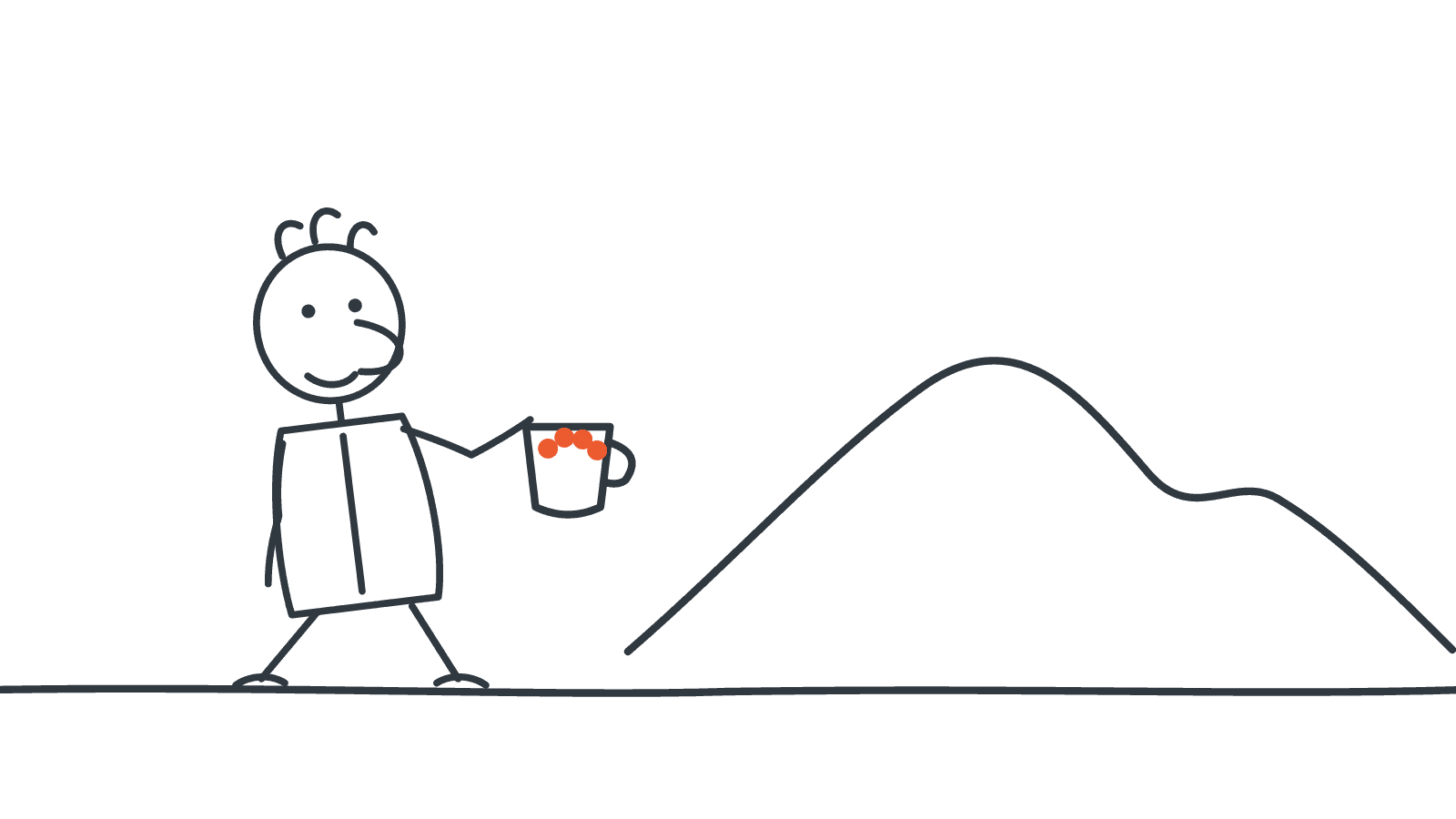
The first Oleg was small. He walked in the garden, and then he decided to go to the mountains for raspberries. He took an enamel mug. There was one mug, but three more stood inside it, and nobody was surprised. The first was for himself, the second for his mom, the third for his grandmother, the fourth for his great-grandmother. Each needed one berry. Not two, because only four berries grew on the mountain.
Oleg found all four berries and came back.
– Where have you been? – asked his mom.
– In the mountains.
– And what is there?
– Raspberries.
– Then why have you come back different?
– I haven’t come back, – said Oleg. – I am still walking.
That is all there is about the first Oleg. Nothing more is known about him, except that he went to the mountains and did not come from there.
Instead of him came the second. He was angry and fat. He ate the raspberries, then the mug, then what lay next to the mug, then what did not lie next to it. He scolded everyone, and it tasted good.
– Who made you like this? – they asked him.
– Time, – said the second Oleg.
– But time is thin.
– Then it was not time, – said the second Oleg, and grew even angrier.
Then he sat and sat in his anger until he became blind. This was the third Oleg. He saw nothing, but he heard how a raspberry turns red. It is a very quiet sound. If you have not heard it, you were not the third Oleg.
The fourth Oleg hid his birthday so that nobody would notice him. And nobody noticed him. They gave him silence, and he decided it meant nothing. But the silence was a gift all the same, it was just that nobody noticed him.
Then he disappeared. First he disappeared from sight. People looked straight at him and saw a wall. Then he disappeared himself. This is the hardest part: to disappear yourself, when from the outside there is already nobody there.
Some time passed, or maybe it did not.
And here he is, meet him: Oleg.
– Are you the same Oleg? – they asked him.
– No, – said Oleg. – I am a new one.
Strange, everyone thought. But it would be even stranger if they saw in him the one they had met long ago.
However, then people began to notice that the new Oleg was somehow like the first. The same look, the same walk, and he looked toward the mountains in the same way. Only he had grown up too much. Much too much.
– Is it him? – some asked.
– I don’t know, – answered others. – Probably it is.
And the mountains stand as they always stood. Without all this worldly bustle. Four berries still grow on the mountain, and nobody counts them, except those who go for them with an enamel mug.
The subtext. We are not one person throughout our lives but a series of people with one name. The boy, the angry fat man, the blind one, the one who hid and the one who vanished live in turns and do not know each other. Buddhism calls this anitya, impermanence, and anatta, the absence of a fixed self: what we call ourselves is a stream of states, like a flame passed from lamp to lamp, neither the same nor another. The Bhagavad Gita (2.13) says the same of the body: childhood, youth and old age follow one another, and the wise are not troubled by it. So it is strange to expect those we knew long ago to have stayed the same, and to demand that of ourselves.
Jung would see in the four Olegs the stages of individuation. The angry fat one is the shadow: everything we refuse to accept in ourselves, until it eats us. The blind one turns from outer sight to inner hearing. The fourth takes off what Jung called the persona: he hides his birthday, that is, the very idea of being “someone”. The vanishing, the death of the former self, is familiar in the Indian tradition as the path of the sannyasin, who symbolically dies to the world and returns changed. The new Oleg, like the first but grown up, is a return to oneself not as a child but as a whole. Jung would call it the Self, and Advaita Vedanta would see the witness who looked at all four and never changed itself.
And the mountains stand without worldly bustle because changeability belongs to a person, not to a place. Four berries for four generations are what Oleg carries through all the transformations: family, memory, loyalty. Identity comes in two kinds: as sameness and as faithfulness. We do not have the first, but the second can be chosen. Remember today who you were ten years ago, and ask yourself which of you has just gone out for raspberries.
Leave a Reply